
Wisdom teeth can cause pain, swelling, and crowding if they don’t grow properly. Our team provides safe and gentle wisdom tooth treatment to protect your oral health.
Wisdom teeth can be unpredictable. For some people they emerge without problems, but for many others they cause pain, swelling, crowding, or infection. At Tristate Dental Spa Jersey City Heights, we understand that wisdom tooth discomfort can escalate quickly and disrupt your daily life. Our goal is to relieve pain, prevent complications, and guide you through treatment with clarity and compassion.
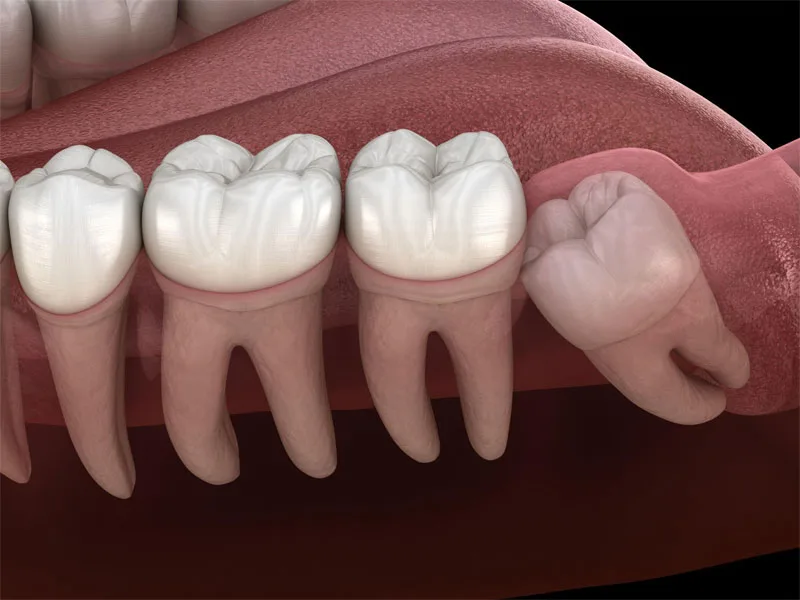
Wisdom teeth, also called third molars, are the last teeth to develop, usually appearing in the late teens or early twenties. Because the jaw often lacks enough space, these teeth may become impacted (trapped beneath the gums), grow at an angle, or press against neighboring teeth. When this happens, they can create significant discomfort and lead to infection or damage to surrounding teeth.
From the moment you contact us, our team focuses on understanding your symptoms and helping you feel at ease. Many patients feel anxious when they hear they may need wisdom tooth removal. We take time to explain your situation, answer questions, and ensure you feel comfortable and informed before moving forward.
If you experience these symptoms, early evaluation can prevent worsening problems.
What Does “Impacted” Mean?
An impacted wisdom tooth cannot fully emerge due to lack of space or improper positioning. Impacted teeth may:
Impacted wisdom teeth often require removal to prevent complications.
When Wisdom Tooth Removal Is Recommended
Early removal often prevents more complex problems later.
The Emotional Side of Wisdom Tooth Pain and Relief
Living with wisdom tooth pain can be exhausting. Persistent discomfort affects sleep, concentration, and mood. Many patients feel relief not just physically, but emotionally, once the source of pain is resolved.
After treatment, patients often report:
Often, patients don’t realize how much the discomfort affected them until it is gone.
What to Expect During Wisdom Tooth Removal
Our priority is your comfort and safety.
Treatment typically includes:
We ensure you understand each step before treatment begins.
Recovery and Healing
Most patients recover within a few days.
To support healing:
We remain available if you have questions during recovery.
No. Removal is recommended when they cause problems or risk future complications.
Local anesthesia ensures comfort during the procedure.
Most patients feel significantly better within a few days.
Dry socket occurs when the protective clot dislodges. Following aftercare instructions reduces risk.
Many patients return within 1–2 days, depending on the complexity.